This article may contain affiliate links. If you buy through them, Fresh Faced Living may earn a small commission at no extra cost to you. Learn more.
Vitamin C in skincare almost never appears on an ingredient label as simply vitamin C. It shows up under specific chemical names, most commonly ascorbic acid, but also as derivatives like sodium ascorbyl phosphate, magnesium ascorbyl phosphate, ascorbyl glucoside, or tetrahexyldecyl ascorbate. These are not interchangeable marketing labels for the same thing. They are genuinely different molecules with different stability profiles, different penetration behavior, and different levels of research behind them.
Ascorbic acid is the reference point
Ascorbic acid, sometimes labeled L-ascorbic acid, is the form with the most research behind it and is generally considered the most bioactive form once it reaches skin. It is also the least stable. Ascorbic acid degrades when exposed to light, air, and heat, and a serum that has oxidized will often shift from clear or pale yellow to a noticeably darker amber or brown color, along with a change in smell. An oxidized vitamin C product has typically lost a meaningful portion of its effectiveness, even though it may still look usable at a glance.
Why formulation matters as much as the ingredient
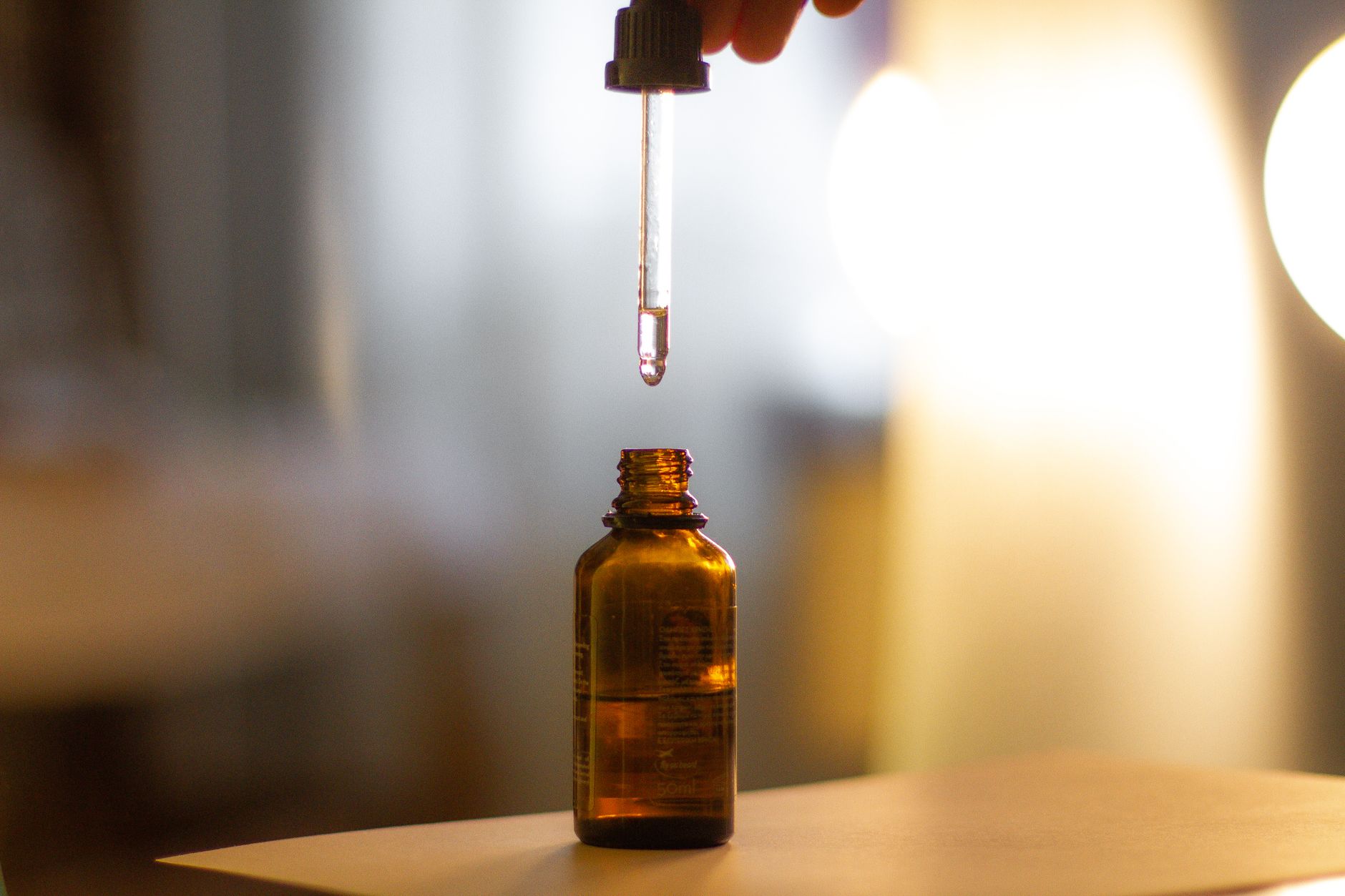
Because ascorbic acid is unstable, how a product is formulated and packaged matters almost as much as the ingredient itself. Opaque or dark glass bottles, airtight or pump packaging that limits air exposure, and a low pH formula all extend how long the product stays active. A vitamin C serum sold in a clear bottle that gets left on a sunny windowsill is working against its own stability from day one, regardless of what percentage is listed on the label.
The derivative forms
Derivatives like sodium ascorbyl phosphate and magnesium ascorbyl phosphate were developed specifically to address the stability problem. They are more stable in a formula and tend to be gentler on skin, which makes them a common choice for sensitive skin products or formulas aimed at daily, low-irritation use. The tradeoff is that they need to be converted into active ascorbic acid by the skin after application, and that conversion process is not perfectly efficient, so less of the ingredient may end up active on skin compared to using pure ascorbic acid directly. Newer derivatives like tetrahexyldecyl ascorbate are oil soluble and formulated to penetrate differently, which is why they show up more often in oil-based serums.
A stable, gentle derivative that a person actually uses consistently often outperforms an unstable pure form that oxidizes in the bottle before it gets used up.
Percentage is not the whole story
Products are often marketed heavily on the percentage of vitamin C listed, but a higher percentage of an unstable or poorly formulated product is not necessarily more effective than a lower percentage of a well stabilized one. Percentage matters, but it is only one factor among formulation quality, packaging, and which specific form of vitamin C is used.
What it is generally used for
Vitamin C is most associated with two roles: supporting the skin’s natural antioxidant defenses against environmental stressors like pollution and ultraviolet exposure, and gradually helping even out the appearance of dark spots and discoloration over time by interfering with pigment production. It is not a replacement for sunscreen, and it works alongside daily sun protection rather than instead of it.
What not to combine it with
Vitamin C in its ascorbic acid form typically requires a low pH to remain stable and effective, and pairing it with ingredients that need a different pH range, or with strong exfoliating acids at the same time, can affect how well either ingredient performs. Many people apply vitamin C in the morning and save retinoids or acids for the evening simply to keep the routine straightforward, though this is more about routine simplicity and minimizing irritation than a strict incompatibility in every case. As mentioned in discussions of niacinamide, older concerns about combining vitamin C and niacinamide have largely been addressed by modern stabilized formulas.
Storage habits that actually help
Keeping a vitamin C serum away from direct sunlight, storing it somewhere cool rather than on a warm bathroom shelf, and making sure the cap or pump is closed properly after each use all extend how long the product stays effective. Some people keep vitamin C serums in the refrigerator, which is not strictly necessary for every formula but can help slow degradation for the less stable ascorbic acid formulas in particular. None of these habits will make an already oxidized product active again. They only slow the rate at which a fresh product starts to break down.
Layering order
Vitamin C is typically applied to clean, dry skin early in a routine, before heavier creams or oils, so it has direct contact with skin rather than sitting on top of another layer. Following it with a moisturizer and, during the day, sunscreen is standard. Because ascorbic acid works best in a low pH environment, applying it before a higher pH product, like some moisturizers, is generally considered a reasonable default, though the practical difference this makes for most formulas is smaller than the stability and storage factors discussed above.
A practical note
If a vitamin C serum has changed color or developed an off smell, it has likely lost potency and is a reasonable one to replace rather than use up out of habit. Beyond that, matching the form of vitamin C to your skin’s tolerance, sensitive skin often does better with a derivative, more resilient skin can typically handle ascorbic acid, is a more useful way to choose a product than chasing the highest percentage on the shelf. A dermatologist can help narrow down options if irritation or uncertainty comes up.